world wide visitors

Flag Counter

Pages

Friday, 7 June 2013

UPDATED: VIDEO of the collision between Minerva Maya and M.L. Crochet


Exclusive video on the collision between the unloaded 800-foot tanker ship Minerva Maya and a tug pushing barges, being pushed by the tug vessel M.L. Crochet in Houston Ship Channel on June 2nd, 2013.

The USCG responded to the collision between all vessels on Sunday.

According to the latest information the tanker ship Minerva Maya sustained some hull damages. There are no injured people or any environment pollution.

The cause of the accident is still under investigation.

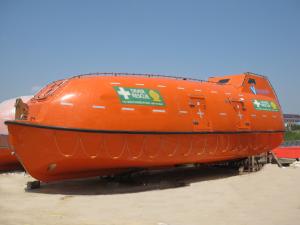
DNV Plans on Enhancing Lifeboat Safety

DNV (Det Norske Veritas) has plans on enhancing maritime lifeboat safety.

There were incidents in the past with lifeboats. An industry project was started by OLF (the 

Norwegian Oil and Gas Association)for these incidents.

Requirements for lifeboats were tested in calm waters and from heights smaller than those for 

example on host facilities on the Norwegian Continental Shelf. In real situations lifeboats are 

exposed to greater loads and damage. DNV has to develop a standard for the design of free 

fall lifeboats. The standard of the design of lifeboats is revised and test were performed in 

more extreme conditions. Lifeboats on the Norwegian Continental Shelf are now being built 

according to the DNV standard.

Olav Rognebakke, the head of DNV’s Ship Hydrodynamics and Stability Section said: 

"If the shipping industry decides to implement our Free Fall Lifeboat standard, I believe 

maritime lifeboat safety will be taken an important step further."


A COMMERCIAL fishing trawler has damaged the Great Barrier Reef and spilled diesel


A commercial fishing trawler has damaged the Great Barrier Reef and spilled diesel fuel after running aground off central Queensland.
The incident happened about 3.30am on Thursday near Lady Elliot Island off Gladstone which is within the World Heritage Area.


The hull of the ship was damaged but no injuries were reported.

Updated on Hijacked Tanker Matrix I: the 5 kidnapped crew members released

According to the information released by Reuters, the five kidnapped Pakistani crew

 members of Nigerian tanker Matrix I, kidnapped by Nigerian pirates on 25th of May, 

2013 were freed. All the released crew members are in a good health condition. No details 

available as to the terms of the release.


Previous information on the accident: pirates attacked the Nigeria-flagged, but Greek-


operated, product tanker ship Matrix I early in the morning of May 25th, 2013 some 40

 n.m. of the coast of Bayelsa state, Nigeria. Operator of the tanker ship, Val Oil Trading 

Co., confirmed the attack, but did not reveal any other details. Reportedly, some of the

 crew were kidnapped. Crew is said to consist of twelve Pakistani and 5 Nigerians, wrote 

Reuters. 

Sunday, 2 June 2013

Pirates kidnap 7 PAKISTANI

The ship which is  attacked is MT MATRIX I.
MATRIX is a Nigeria ship a tanker one was attacked about 42 NM of Cap Formoso,The vessel was having 17 crew members and was sailing with a speed of 6 knots.
It is a bad thing that several ships are being attacked in the same area last month-MT BOSUN, MV CITY OF XIAMEN, MV CITY OF GUANGZHOU and off shore crew boat UTAI 8.
It is also noted that 4 crew members have  been  released  of HANSA MARBURG by the pirates 

Thursday, 23 May 2013

Sharjah Oil tanker catches fire at Hamriya port

Coast guard team rescued nearly 16 members in this incident  

According to the news it states that The fire broke out on board at around 12am. the tanker called AL KABEER which had a Togo flag, left Hamriya port on may 9 after emptying its oil shipment and was in the waiting area located at the distance of 10 NM to avoid charges.Port authorities said that the operations control room dispatched a coast guard team to rescue the crew.

Its noted that all crew members are ASIAN . A thick blanket of smoke araised all over the area as a team battled to save the ship
This incident took a long time to extinguish because the flames were very strong causing the rest of the cargo on board to be completely destroyed 

UAE authorities have launched an investigation about this matter

SHIP DETAILS :

Name : AL KABEER

Type : Oil Products Tanker

IMO : 8989197

MMSI : 671194000

Call Sign : 5VBD2

Built : 1995

Flag : Togolese Rep

Port of registration : PANAMA

Thursday, 9 May 2013

MINNESOTA Submarine had finished his trail

The USS MINNESOTA Commissioning Committee announce a $300,000 Capitol Campaign to fund the Commissioning Ceremony of MINNESOTA in the late summer, early fall of 2013.  We are excited to provide the funding for this historic event.  The USS MINNESOTA Commissioning Ceremony is the most significant event bringing MINNESOTA to life.  Your contributions will go to the expenses the US Navy cannot legally provide. 
launching of MINNESOTA
launching of MINNESOTA(1)


launching (2)
In July 2008 the United States Navy announced Minnesota would be honored by having a warship named after our state.  Not since 1907 have we welcomed a ship named 'USS Minnesota' to the fleet.

When commissioned, the fast attack submarine USS Minnesota SSN 783 will be the most advanced ship in the fleet.


General characteristics

Class & type:virginia class submarine
Displacement:7800 tons light, 7800 tons full
Length:114.9 meters (377 feet)
Beam:10.3 meters (34 feet)
Propulsion:S9G reactor
Speed:25 knots (46 km/h)
Range:Essentially unlimited distance; 33 years
Test depth:greater than 800 feet (250 meters)
Complement:134 officers and men

Marine Diesel Test Engine Up & Running


One of the world’s largest four-cylinder two-stroke marine diesel test engines (the electronically-controlled 4UE-X3 with a bore diameter of 60 cm) has been installed and brought up to speed at MHI, Mitsubishi Heavy Industries’ Nagasaki Research & Development Centre, where it thumps away producing data the Japanese marine engine manufacture needs to keep up with the leaders in a highly competitive business.  
 MHI claims it is the only licensor among the top three in the world to carry out all of its own engine development, design and manufacturing.The company is focusing its R&D attention on the slow-speed diesel, the workhorse engine of choice for the majority of the 50,000 or so large merchant ships that continually ply the oceans in global trade. Engine of choice by shipowners, it normally burns heavy C bunker oil, the cheapest dregs of oil in the refining process, but nevertheless it is also energy efficient. 
As a sole propulsion engine, it achieves thermal efficiency as high as about 50% with a directly coupled slow propeller shaft rotational speed of about 100 rpm.
The test engine is being used not only to verify the performance and reliability of the latest engine technologies, but also to develop engines capable of operating on different kinds of fuel (gaseous fuels, like LNG in particular) so as to comply with increasingly stringent engine exhaust gas emission regulations. For example, with this in mind, an EGR (Exhaust Gas Recycling) system, has been tested already and the NOx reduction effect ascertained.
MHI plans eventually to bring the  4UE-X3  engine to the market after its performance has been fully optimised.

Test Engine Features

Main body structure: The main body (bed plate and column) uses a high rigidity, light-weight and simple single wall structure for simplicity of manufacture. The structure and thickness of the wall is optimized through FEM analysis using 3D modeling, etc.

Combustion chambers: Bore cooled, high top land pistons are used to deal with the high heat load. The cylinder liners employ a new construction with reinforced rings.
Bearings: The main and crankpin bearings are aluminium bearings instead of conventional white metal bearings.

Electronic control: Full electronic control is employed, in line with the compact and reliable Eco system used on the latest commercial engines.

Lubricating system: The latest A-ECL system, which can reduce lubricating rate, is used as the cylinder lubricating system.

Test plant control: Remote control and alarm systems are installed in order to simulate actual operation on a ship. In addition, MHI's DIASYS Netmation® control system was used for the integrated control of auxiliary machines and ancillary facilities

CSCL to construct five 18,000TEU ultra large container ships


Hyundai Heavy Industries of Korea has been awarded a contract from China Shipping Container Lines (CSCL) to construct five 18,000TEU ultra large containerships, which are due for delivery in early 2015.
Newbuilding price is reportedly equal to around $140m each. Large Korean shipbuilders including Daewoo Shipbuilding & Marine Engineering, Samsung Heavy Industries and etc. along with Chinese shipyards are said to have participated in the bid for the newbuilding project, however Hyundai was chosen being the best bidder both in terms of ship value and delivery conditions.
Hyundai faces a busy period ahead with its new orders, having already inked a contract with Seaspan for construction of five 14,000TEU very large containerships, costing $120m each.
Meanwhile, proceeding with service cooperation for 18,000TEU with CSCL, the Middle East-based shipping company United Arab Shipping Company (UASC) is said to be in talks with shipyards in Korea, China and Japan for a deal to construct five 18,000TEU with other five 14,000TEU newbuildings.
UASC is expected to choose preferred bidders within May and enter negotiations for ship prices, classifications and so on.

Rules for Force Launched

The long awaited 100 Series rules for the use of force (RUF) have finally been released after a 20-month consultation period across the shipping industry.


With the support of SAMI, BIMCO, ICS, and UNICRI who have played a key role in making RUF possible, the author David Hammond, a UK barrister-at-law and maritime lawyer, said the 100 Series RUF is intended to be the first international model set of RUF for the benefit of and use by the entire maritime industry.
However the rules will not provide any form of indemnity or immunity against civil or criminal liability when force has been used unlawfully, they exist to provide a model against which privately contracted armed security personnel may be professionally trained; companies may be audited and operator actions measured and judged by competent authorities.
The guidance of the past simply wasn’t enough – there is a “perversity” that rules for the use of force have not existed, and according to David Hammond there is no definition of the term “guidance” in any legal dictionary – so it was clear that something was lacking in the provision of support to the maritime industry.
The rules set out a threshold to start using force, soft measures come first, then escalating to aimed warning shots, finally rule 103 allows use of lethal force. The laying out of the steps is key, before there was simply guesswork, but now there is a process and a means of working within the boundaries of acceptability – it also addresses human rights in terms of the use of force at sea, providing as it does not just protection for the guard, but seafarers, and also the pirates.