world wide visitors

Flag Counter

Pages

Showing posts with label Developments. Show all posts

Monday, 16 December 2013

Wärtsilä’s 2-stroke dual-fuel engine introduced

The marine industry is already showing significant interest in the new Wärtsilä 2-stroke, low-speed, dual-fuel (DF) engine technology. More than 130 industry executives from 89 leading shipping companies attended the introductory event in Trieste, Italy on November 12, which is in itself a clear indication that there is global recognition of the role that LNG fuel will play over the coming years.


Wärtsilä launches 2-speed marine gearbox to significantly reduce fuel consumption


Wärtsilä, the marine industry’s leading provider of innovative products, solutions and services, has launched its new 2-speed marine gearbox offering notable economic and environmental benefits. The product will serve vessels having multiple operational modes or reduced transit speed, including among others RoPax ferries, offshore support vessels, tug boats, and fishing vessels.

Alfa Laval Wins a Repeat Environmental Order for Marine Exhaust Gas Cleaning Systems


Alfa Laval - a world leader in heat transfer, centrifugal separation and fluid handling - has won an order to supply Alfa Laval PureSOX exhaust gas cleaning systems to the Dutch ship owner Spliethoff. The order is booked in the Marine & Offshore Systems segment and delivery is scheduled for 2014. Due to a confidentiality agreement Alfa Laval is unable to disclose the value of the order.

MOL, WFS Sign Deal to Build, Charter Methanol Carrier: World's First Dual-Fuel Engine Uses Methanol and Heavy Oil

Mitsui O.S.K. Lines, Ltd. yesterday announced the signing of a contract with Waterfront Shipping Company Limited(*1)  to build and charter up to three methanol carriers. The vessels will be equipped with the world's first flex-fuel engines running on methanol, fuel oil, marine oil, or gas oil.

Friday, 13 December 2013

Korean companies investing $940m in floating power plant

Korean firms Polaris Shipping, Korea Midland Power, Hyundai Heavy Industries (HHI) and 

Siemens Energy Solutions have decided to invest in floating power plant and have agreed to 


put $940m to create a Floating Storage Regasification Unit (FSRU).

This ambitious project will be ready according to plans in 3 years. The 'Mobile Powership' will 

have similar design to the known HHI's LNG FSRU with power capacity of 880MW. The floating

 power plant will be able to handle the needs of power in the time of natural disasters. Polaris 

Shipping informed that the produced power will be transmitted with the help of the existing 

infrastructure of cables.

Tuesday, 3 December 2013

DNV GL and SDARI introduce new Green Dolphin bulk carrier concept


DNV GL and Shanghai Merchant Ship Design & Research Institute (SDARI) have introduced the Green Dolphin 575 concept design for a handymax bulk carrier. This second design builds on the success of the handysize Green Dolphin 38 for which around 80 orders have been placed with the major share to DNV GL class. Green Dolphin 575 aims to be fuel and energy efficient, robust and reliable, operationally flexible and able to meet current and future environmental regulations. It uses technologies that are already available for commercial use, so it can meet ship owners’ current needs in tight market conditions.


The Green Dolphin 575 is a 190m long Common Structural Rules (CSR) compliant handymax bulk carrier with five cargo holds. It is available in single hull standard or double-hull (open hatch) configurations.

Monday, 4 November 2013

Retrofit Solutions for Exhaust Gas and Water Cleaning by WARTSILA

Upcoming environmental regulations will affect existing vessels, and as a consequence there is a growing demand for exhaust gas cleaning and ballast water treatment systems.

Retrofitting both scrubbers and ballast water management systems is – or will soon be – required for many ships to comply with regulations. There are retrofit solutions available across all ship types, from cruise vessels to merchant and offshore ships. Space requirement is usually the most critical factor when planning and executing a retrofit project but Wärtsilä has found solutions to the challenge.

The execution of retrofit projects for both scrubbers and ballast water management systems requires similar types of planning and engineering. There are typically three things that are analysed when planning a retrofit of exhaust gas or a water cleaning system. First, the space requirements of the system are analysed, taking into consideration the available space in the vessel. Next, engineers study the impact of the additional systems in terms of their weight, ship stability in case of scrubber systems, structural modifications, and relocation of any existing equipment inside the ship. Finally, engineers assess how to further optimise the installation method, with the aim of minimising costs and downtime during installation.

“Retrofitting exhaust gas or ballast water cleaning systems is feasible for all ship types – but how it is done can vary depending on the ship type. Finding space for the system is the most common challenge. When it comes to scrubber installations, we, for example, sometimes need to make changes in the funnel shape or rethink the use of spaces in the vessel to create more room for cleaning systems. However, we have not come across any project in which retrofitting would not be possible. It is just a matter of identifying the best solution or compromise with the ship owner,” says Leonardo Sonzio, Director Retrofit, Wärtsilä Environmental Solutions.

Monday, 21 October 2013

Brodosplit signed the contract for the construction of Multipurpose Container vessels


Shipbuilding Industry Split Inc. and the domestic shipping company Brodosplit-Navigation Ltd., have signed a contract for the construction of a two Multipurpose Container vessels.

The special feature of this vessels is that it will use the LNG fuel (liqufied natural gas), which is the cleanest and environmentally friendly fossil fuel. This is so important because the container vessels with LNG fuel will be more attractive in the global shipping market due to new national and international regulations that will prescribe the permitted quantities emissions (NOx, SO2 and CO2), which is gradually introduced into a new seas (first U.S. and Baltic).
Brodosplit container vessel will have a low speed 2 stroke "dual fuel" (LNG/HFO) engines that have higher efficiency (lower energy) and work at lower rpm (low speed engines), resulting in lower maintenance costs and longer life span . Now, in the world is made ​​only one container vessel with a 2 stroke "dual fuel" engine. Also can use diesel fuel, and in emergency situations has the ability to drive with the cooking oil from food sectors, as well as all other oils or fuels. According to that, coantainer vessels from Brodospolit shipyard will have four to five times lower cost per mile than the other ships of this class, and 30-50 times less will pollute environment. Thanks to more efficient consumption and superb efficiency, investments in the 2 stroke "dual fuel" engines will be paid out after two to three years of exploitation. Extremely important in this project is that the engines will be made by the Brodosplit diesel engine factory, under the license of the MAN, as well as the special tanks for LNG fuel will also produce in Brodosplit shipyard.
Source: Brodosplit Shipyard

Sunday, 21 July 2013

LNG Fueled Vessels


alternative to Diesel Strengthens as Barriers Continue to Fall.
From the earliest days of mechanically propelled ships, fuel use has been evolving.  Starting with wood, fuel changed to coal, which held sway for many years.  Oil began to be used in the late nineteenth century and was clearly the dominate marine fuel of the twentieth century.  Environmental shortcomings of fuel oil, particularly traditional heavy bunkers, were brought under increasing scrutiny as the twentieth century came to a close.  As air emission regulations became more strict and petroleum costs increased, ship owners and operators began searching for an alternative fuel.  Consideration may be given to non-fossil-fuels, but all have practical drawbacks.  Among the available fossil fuels, natural gas is the cleanest – and the price has been dropping in recent years.

1st Orders for the New Wärtsilä X62 Marine Diesel Engine


Wärtsilä has received its first two orders, a total of seven engines, for the Wärtsilä X62 2-stroke low speed engine.

Friday, 7 June 2013

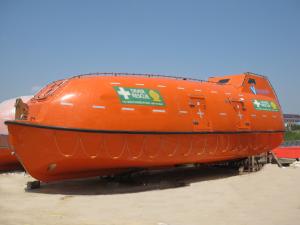
DNV Plans on Enhancing Lifeboat Safety

DNV (Det Norske Veritas) has plans on enhancing maritime lifeboat safety.

There were incidents in the past with lifeboats. An industry project was started by OLF (the 

Norwegian Oil and Gas Association)for these incidents.

Requirements for lifeboats were tested in calm waters and from heights smaller than those for 

example on host facilities on the Norwegian Continental Shelf. In real situations lifeboats are 

exposed to greater loads and damage. DNV has to develop a standard for the design of free 

fall lifeboats. The standard of the design of lifeboats is revised and test were performed in 

more extreme conditions. Lifeboats on the Norwegian Continental Shelf are now being built 

according to the DNV standard.

Olav Rognebakke, the head of DNV’s Ship Hydrodynamics and Stability Section said: 

"If the shipping industry decides to implement our Free Fall Lifeboat standard, I believe 

maritime lifeboat safety will be taken an important step further."


Thursday, 9 May 2013

MINNESOTA Submarine had finished his trail

The USS MINNESOTA Commissioning Committee announce a $300,000 Capitol Campaign to fund the Commissioning Ceremony of MINNESOTA in the late summer, early fall of 2013.  We are excited to provide the funding for this historic event.  The USS MINNESOTA Commissioning Ceremony is the most significant event bringing MINNESOTA to life.  Your contributions will go to the expenses the US Navy cannot legally provide. 
launching of MINNESOTA
launching of MINNESOTA(1)


launching (2)
In July 2008 the United States Navy announced Minnesota would be honored by having a warship named after our state.  Not since 1907 have we welcomed a ship named 'USS Minnesota' to the fleet.

When commissioned, the fast attack submarine USS Minnesota SSN 783 will be the most advanced ship in the fleet.


General characteristics

Class & type:virginia class submarine
Displacement:7800 tons light, 7800 tons full
Length:114.9 meters (377 feet)
Beam:10.3 meters (34 feet)
Propulsion:S9G reactor
Speed:25 knots (46 km/h)
Range:Essentially unlimited distance; 33 years
Test depth:greater than 800 feet (250 meters)
Complement:134 officers and men

CSCL to construct five 18,000TEU ultra large container ships


Hyundai Heavy Industries of Korea has been awarded a contract from China Shipping Container Lines (CSCL) to construct five 18,000TEU ultra large containerships, which are due for delivery in early 2015.
Newbuilding price is reportedly equal to around $140m each. Large Korean shipbuilders including Daewoo Shipbuilding & Marine Engineering, Samsung Heavy Industries and etc. along with Chinese shipyards are said to have participated in the bid for the newbuilding project, however Hyundai was chosen being the best bidder both in terms of ship value and delivery conditions.
Hyundai faces a busy period ahead with its new orders, having already inked a contract with Seaspan for construction of five 14,000TEU very large containerships, costing $120m each.
Meanwhile, proceeding with service cooperation for 18,000TEU with CSCL, the Middle East-based shipping company United Arab Shipping Company (UASC) is said to be in talks with shipyards in Korea, China and Japan for a deal to construct five 18,000TEU with other five 14,000TEU newbuildings.
UASC is expected to choose preferred bidders within May and enter negotiations for ship prices, classifications and so on.

Rules for Force Launched

The long awaited 100 Series rules for the use of force (RUF) have finally been released after a 20-month consultation period across the shipping industry.


With the support of SAMI, BIMCO, ICS, and UNICRI who have played a key role in making RUF possible, the author David Hammond, a UK barrister-at-law and maritime lawyer, said the 100 Series RUF is intended to be the first international model set of RUF for the benefit of and use by the entire maritime industry.
However the rules will not provide any form of indemnity or immunity against civil or criminal liability when force has been used unlawfully, they exist to provide a model against which privately contracted armed security personnel may be professionally trained; companies may be audited and operator actions measured and judged by competent authorities.
The guidance of the past simply wasn’t enough – there is a “perversity” that rules for the use of force have not existed, and according to David Hammond there is no definition of the term “guidance” in any legal dictionary – so it was clear that something was lacking in the provision of support to the maritime industry.
The rules set out a threshold to start using force, soft measures come first, then escalating to aimed warning shots, finally rule 103 allows use of lethal force. The laying out of the steps is key, before there was simply guesswork, but now there is a process and a means of working within the boundaries of acceptability – it also addresses human rights in terms of the use of force at sea, providing as it does not just protection for the guard, but seafarers, and also the pirates.

Wednesday, 24 April 2013

The new innovation of ship which makes our jaws wide open "THE TRIPLE E SHIPS"

The name Triple E ships is named for three principle
  1. Economy of sale
  2. Energy efficient
  3. Environmentally improved
These ships are expected to be the largest container ships. The ship will be 400 meters (1,312 ft) long and 59 meters(194 ft) wide. The triple E ships will be able to carry 2,500 more containers, with a draft of 14.5 meters(48 ft) they will be too deep to use any port in the America or cross the panama canal, but will be able to sail in suez canal when sailing between Europe and Asia.

Totally if the container is stacked on top of each other they would touch the stratosphere -29 miles above the earth.If they are loaded on the single train it would need to be 68 miles long.
                                                                  Emma maersk
                                                              Triple E
It uses dual 32 megawatt (43,000 hp) ultra-long stroke-two stroke diesel engine.driving two propeller at a designed speed of 19 knots.

Tuesday, 23 April 2013

MAERSK plans to remove the nose of the ship to increase the efficiency

MAERSK LINE is set to remove the bulbous bows from its container ship, to cut its bunker bills. with a weight of at least 140 tons, removal of bulbous bow will be a costly operation which will take around 12 days per ship to complete . which will create a fuel saving of 1-2% and estimated to take place in 2013

 which will create a fuel saving of 1-2% and estimated to take place in 2013
The purpose of the bulbous bow is to even out waves created alongside the vessel, thus reducing the propulsion power needed. Large container vessels are typically designed for speed of 25 knots, but with today's slow steaming the bulbous bow are often out of shape and thus generate high level of resistance.

Friday, 19 April 2013

M.V."IONIC SMYRNI", 56,000 DWT Type Bulk Carrier with Huge Cargo Hold Capacity is LAUNCHED

Mitsui Engineering & Shipbuilding Co., Ltd. (MES) completed and delivered a 56,000 dwt type bulk carrier M.V. Ionic Smyrni (MES Hull No. 1846) at its Tamano Works on 18th April, 2013 to Ionic Smyrni Inc., Marshall Island.
a view of  IONIC SMYRNI while launching

This vessel is a handy max type Bulk carrier of 56,000 dwt with large cargo hold capacity over 70,000 m3 and marks the 155th ship of its series.

Saturday, 6 April 2013

New paper for chemical tanker safety data sheets (SDS)

Many significant bodies have put their heads together for a very important task of preparing a comprehensive paper for chemical tanker safety data sheets. INTERTANKO, the International Parcel Tankers Association, the Chemical Distribution Institute, the European Chemical Industry Council, and the Dangerous Goods Advisory Council, all have collaborated to prepare a paper that contains the regulatory requirements and guidance governing the provision of SDS. The paper has all the necessary information required by the seafarers, owners and shippersCaptain Steve Hardy of Inter orient Marine Services and Chairman of INTERTANKO’s chemical tanker committee said: “ It is very good to see organizations from two vital parts of the supply chain—ship owners and shippers—come together in support of this document. It will provide seafarers with clarity and become an easy reference on the various requirements for the provision of, as well as on the contents of Safety Data Sheets”. Roger Restaino of Stolt-Nielsen USA and Chairman of INTERTANKO’s Chemical Tanker Sub-Committee, Americas, described the document as a very valuable one “for the crew on the ships and staff in the offices”. He also added: “We also see it to be a valuable educational tool for our discussions with the manufacturers and shippers of products and who generate safety data sheets”.

Sunday, 24 March 2013

Tweendecker

Tweendeckers are general cargo ships with two or sometimes three decks. The upper deck is called the main deck or weather deck, and the lower deck is the tweendeck. Cargo such as bales, bags, or drums can be                                  stacked in the tweendeck space

Today the tweendecker is more likely to be referred to as a multi-purpose ship, a term that is quite vague and has different meanings to different people. While some do apply it to traditional tweendeckers, others believe that for the term to be valid, some additional feature must also be present. There are, for instance, vessels that have folding or moveable tween decks and some also which have a RORO ramp included into the design.